


Adaptive Equipment for Independence: Occupational therapy recommendations for adaptive equipment at Home that improve safety | Thrive OT Your Way
Updated: Apr 10
Empowering Independence with Adaptive Equipment
At Thrive OT Your Way, our mission is to support each person’s journey toward greater independence, confidence, and meaningful participation in everyday life. One of the tools we frequently use in occupational therapy is adaptive equipment — devices that help bridge the gap between what someone wants or needs to do and what they currently can do with ease.

What Is Adaptive Equipment?
Adaptive equipment are tools or devices that make everyday tasks more accessible when someone is experiencing physical, sensory, or cognitive challenges. These aren’t just gadgets — they’re tailored solutions that meet real functional needs in daily routines like dressing, eating, bathing, or moving around safely.
Think of adaptive equipment as smart support — helping you preserve dignity, reduce effort, and participate more fully in your day.
Why Adaptive Equipment Matters
Many people come to therapy trying to restore lost skills — and that’s a key part of what we do. But sometimes, restorative progress plateaus before a person regains the strength, coordination, or endurance needed to complete a task safely or independently. That’s where adaptive equipment steps in.
For example:
A person with tremors might benefit from weighted utensils to make self-feeding calmer and more successful.
Someone with limited reach might use long-handled bath brushes or grab bars to maintain hygiene without strain.
Visual cues or adapted handles can turn a frustrating task into a manageable one.
Adaptive equipment isn’t about doing it for you — it’s about giving you back control and reducing unnecessary barriers to participation in the routines that matter most.
When Do We Consider Adaptive Equipment?
We look at adaptive solutions when:
Memory, strength, balance, or coordination challenges make tasks unsafe or extremely effortful.
Traditional therapy approaches have helped, but you still hit a functional barrier.
Safety concerns arise — like risk of falling in the bathroom or dropping hot dishes during meals.
An OT assessment explores not only what tasks are hard, but why they’re hard. We look at physical abilities, cognitive abilities, environment, goals, and personal preferences — because the best equipment is the one you will use.

Occupational therapy recommendations for adaptive equipment that improve safety- Types of adaptive equipment we may recommend
Adaptive equipment is as varied as the people we serve. Some examples include:
Daily living aids: button hooks, elastic shoelaces, adaptive eating utensils, reachers, sock aides, long handled shoe horns.
Bathroom safety equipment: shower chairs, grab bars, handheld shower heads, non-slip mats, motion-sensor night lights.
Mobility supports: walkers, rollators, canes, lifts, hiking poles
Cognitive and sensory tools: visual organizers, communication aids, reminder systems, medication management tools,
Low vision aides: magnifiers, high contrast stickers and tactile dots, targeted lighting.
We guide our clients through not just selection, but training — so they feel confident, safe, and competent using their chosen equipment.
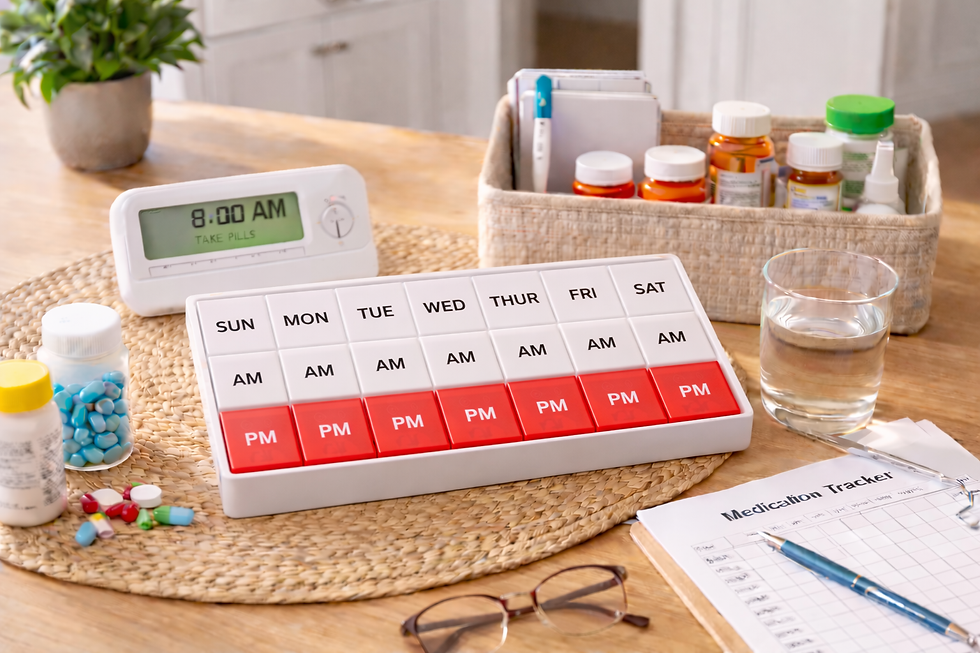
A Personalized Path to Independence
Adaptive equipment isn’t one-size-fits-all — it’s person-centered. That means we take time to understand your daily routines, goals, and environment. We adjust recommendations as needs evolve, celebrate small wins when a device finally “clicks,” and partner with you every step of the way.
At Thrive OT Your Way, adaptive equipment supports your way of living — not a generic idea of independence. Whether it’s brushing your hair without help or navigating your home with confidence, the right tools can make it easier.
If you or someone you care about is struggling with everyday tasks, Thrive OT Your Way can help. We provide personalized occupational therapy recommendations for adaptive equipment that improve safety. Our services focus on independence, and participation in daily life. Contact us to learn more about adaptive equipment solutions and recommendations that improve safety and are tailored to your needs.
Serving Auburn and Opelika
Thrive OT Your Way provides mobile outpatient occupational therapy services in Auburn, Opelika, and surrounding communities. We help adults improve safety, independence, and participation in daily activities using personalized strategies and adaptive equipment in real-life environments.
Frequently Asked Questions
What is adaptive equipment in occupational therapy?
Adaptive equipment includes tools that help people complete daily activities more safely and independently, such as grab bars, reachers, and medication organizers.
Who benefits from adaptive equipment?
Adults experiencing changes in strength, balance, cognition, vision, or coordination may benefit from adaptive equipment.
Does occupational therapy help choose adaptive equipment?
Yes. Occupational therapists assess daily routines, environment, and goals to recommend personalized solutions.
About the Author

Theresa Chavez, OT/L, MBA, is the founder of Thrive OT Your Way, a mobile outpatient occupational therapy practice serving Auburn and Opelika, Alabama. With more than 34 years of experience, she helps adults improve independence, safety, and confidence at home and in their communities.
This article is for educational purposes and is not a substitute for individualized medical or therapy advice.
Images in this article are AI-generated illustrations created by Thrive OT Your Way to represent real-life occupational therapy scenarios.


Comments